$100 Burger flight over Dallas
It was time for another excuse to fly the family! This time, for burgers in a neighboring suburb.
I flew us from Addison (KADS) to Grand Prairie (KGPM) to meet up with a friend for burgers at Mixed Up Burgers. The burgers were very delicious and service was great. Oh, and kid friendly! After burgers, pictures of the boys, bathroom breaks, and threats of no ice cream if there was any fighting in the backseat, we departed. Rusty was pilot-in-command going home to Addison.
Both flights were uneventful, although my visual approach into Grand
Prairie was less graceful. I spotted Arlington's larger airfield just
beyond our destination and mistook that for KGPM. I was on short base
before I realized I where I needed to be, and was 1500 feet too high. So
I flew the pattern to dump altitude and get coordinated for my
landing.
Anyway, here's the video of Rusty's flight.
Oral Exam Passed!
I passed the Instrument Rating Oral Exam this afternoon.
There are area thunderstorms today so the flight is going to be this weekend (assuming fair weather), hopefully on Saturday.
I have a lot more studying to do to prepare for that. Just because I'm done sitting across from him at a table answering questions doesn't mean he won't drill me on some of the same topics I missed and ask other questions.
Details to follow as events unfold. yay!
Weather Restricted (Still)
We were so hopeful and excited about flying to Chicago! I had paper maps, a departure, fuel stops, runway information, ground transit- it was planned, all systems go except- EXCEPT- the weather got in the way. AGAIN!
(I cannot wait to be instrument rated. Stay tuned, I’m working on it.)
So what happened? you ask.
We did our weather research days in advance like good pilots. By Tuesday, we were watching weather forecasts for the cities between here and there. Several weather forecasting sites all agreed that there would be storms across the Central part of the U.S. on Friday, and several sources agreed on storms the Sunday we wanted to return. We also saw forecasts for overcast skies across large portions of our route.
We decided not to chance it and bought airline tickets instead.
Friday, we departed Southwest Airlines out of Dallas Lovefield under dark, low clouds. I say that to make myself feel better. Really, we probably could have flown ourselves East under the clouds, or between layers, to the overcast shelf. After the shelf, we would have been in the clear for a bit, then we would have been stuck on top for much of the Central Plains flight.
 |
| Leaving Dallas |
 |
| What aviation nerds do during commercial flights. |
It might have worked out! Or, it might have ended in disaster. What if we had issues stuck on top? There was a lot of turbulence (at airliner flight levels) that might have also been at lower altitudes. Would we have been tossed around?
Arriving into St. Louis, the clouds were breaking up and I could see ground well before we went through the cloud layer. Some time after St. Louis, the clouds cleared up and was all clear into Chicago. We totally might have made it.
 |
| Somewhere between St. Louis & Chicago |
We had a most excellent time in Chicago!
 |
 |
Sunday morning, we woke up early to catch our flight. There were low scattered clouds about 1000 feet off the ground that disappeared well before our scheduled flight. Same as last time, there was no lack of overcast clouds to trap VFR pilots on top. This time though, we arrived in Kansas City, MO to more scattered than broken, meaning there were patches of visibility between clouds, meaning we totally might have made it. Departing Kansas City then into Dallas, clouds began to break up and clump into fluffy compact sky pillows.
 |
| Enroute to Kansas City, MO |
 |
| Over Kansas City |
 |
| Back at Dallas |
The clouds looked ominous but there was no rain and little wind. Totally. Could. Have. Flown. That.
But here’s the thing. It would have been a huge risk as VFR pilots. There would have been long stretches of flying on top with no way to get down without breaking the law and possibly bumping into something. And there was no way to know that at the time we flew into St. Louis and Kansas City that there would have been enough of a break between clouds to get down. It could have been solid overcast, but it happened to break up. Weather forecasting has gotten much better in recent years, but it has a long way to go before pilots can reliably predict the when and where on clouds.
So this blog post is about me whining that I could have flown but chickened out after forecasts for storms seemed so sure. This is not a story about an accident or incident that I regret. Hopefully that flight doesn’t happen for a very long time, if ever at all!
Your Weather Forecast for This Weekend
The weather this weekend will be scattered area thunderstorms across much of the Central Plains area from Oklahoma to northern Missouri. There will also be thunderstorm activity for the same area and extending into North Texas on Sunday.
And this is why we bought airline tickets to attend the wedding in Chicago.
The False Start and The Bad Deal
I was so pumped, so confident, so nervously ready for an oral exam and checkride last weekend.
Yet, I wasn't ready.
As I faced the examiner across the table from me, my heart was pounding, my hands shaking, my breath short, my eyes wide, my emotions on the edge of erupting either with joy or sorrow depending on how the exam went. My confidence going into the exam was full of hope but quickly deflated as I began to stumble over basic questions, some I knew I knew but panicked and froze up. My brain and my confidence went into a graveyard spiral. I wasn't as prepared I could have been. I thought I was close enough, but really, looking back I can see know how woefully I wasn't.
That was my false start.
The examiner offered his time to review material with me and even shared his notes as to what I missed during the exam so I could review. I gathered my things and walked solemnly back to my airplane. I covered up the canopy, locked everything up, then cried in the car.
I had too much going on that weekend: Joshua's birthday party at 5pm followed by a neighborhood pool party and pressure mounting for a long cross country trip to Illinois. That's not my excuse and it is no excuse. I simply wasn't as ready as I could be.
I had a conversation with the manager of US Sport about what I should do next. He advised me to get with one of his instructors. I scheduled with a guy who I thought would be a Finisher type of CFII. He seemed military to me: little emotional connection, very factual, very methodical, even a bit rigid.
Things were going well. I was being challenged and nitpicked on details from the FARs and equipment and aeronautics. I was asked to make a flight plan from scratch (pencil, paper, E6B, maps & weather data), asked to reread the POH, asked to call in a flight plan, not just use my iPad. It was good! I was actually enjoying the Bootcamp treatment because I believed it was going to make me better, stronger and more ready for the next exam. No stone was left unturned.
"Do you have GPS user manual in the airplane?"
"I have a few-page cheat sheet in my pilot bag."
"The user manual is a 50-60 page book."
"Well, no, I..."
"That mistake will cost you $500."
gulp!
Then today happened.
We were to go up into low cloud IMC on a flight to Tyler, TX. I made the flight plan on paper quickly, picked out the alternate airport, looked up pertinent weather, called the briefer, and preflighted the airplane. I was ready to go, fully expecting to be diverted then tested on a variety of flight maneuvers and approaches.
As I started up the airplane going step-by-step with my checklist, the instructor asked what the yellow words on the GPS screen said.
The 530/430 WAAS GPS system showed that the obstacles database had expired in February of this year.
"Can we legally shoot a GPS approach with outdated information?" he asked.
"I did not read anything in the FARs about an obstacle database being required."
"But if the database is expired, is that safe to do a GPS approach?"
I think it is safe enough. Obstacles like towers and buildings don't change very quickly.
We went back and forth on the issue for a moment, then the conversation evolved to my ultimatum:
"I feel confident that GPS course laid out into Addison is clear of obstacles and that clouds are high enough that we could safely get back. What do you want to do? Are we a go or a no-go?"
The instructor said he did not feel safe going on a flight and so the flight was canceled. I taxied back to the hangar space, shut it all down, tied it up, covered the canopy, and collected my things. A perfectly good flying day was canned on the basis of having the GPS obstacles database expired by four months. None of the other instructors had made obstacle mapping a requirement of GPS flight. None of previous FOUR instructors took issue with it. I had current paper plates and maps (VFR and low IFR) to reference.
I called Rusty to discuss the change in plan. He felt as incredulous as I did.
I tried to reschedule. He's booked with another student. Tomorrow- booked. Monday- booked. Tuesday- booked. Wednesday, available after 5pm.
"Can we do ground time, review material to prepare me for the next test?"
"I need to see you fly."
I didn't have enough time to run home to update the database then be back for a flight before his next appointed student would arrive. And he didn't take my offer for ground time to study other topics.
My female brain heard "We're done."
I later did update one Garmin card with a new obstacle database at the cost of $200, and read carefully Garmin's terms of use,
... to use the Database in a Garmin GPS receiver or System and, if applicable, use as a VFR reference tool, but not for primary airborne flight navigation, during the effective period stated on the Database download page.
Not for primary airborne navigation. This explains why plates for GPS approaches show obstacles depicted. The maps and procedures updated every 28 days are certified for primary airborne navigation, but obstacles are not.
I reluctantly paid for my time with him, then left, crying and pissed. Angry that I had just paid, over two days of time, $275 for an instructor who wasn't available to help me with my goal to prepare for a retest, and who wasn't available to see me finished any time soon, angry that the very FBO that got me started wasn't able to finish me with a rating, angry that so much effort and time and money had been spent only to be stuck, and dumped again by yet another instructor. I have had CFII instruction by six instructors, seven if you count that one girl CFII who was a no-show the second time we were scheduled. I understand that flying with various instructors is good to learn various perspectives and techniques. But none of these guys were Finishers. There was no sense of ownership to see me get rated.
I was in the self-checkout lane.

I have decided I am done using that FBO as a student. They are terrific with mechanical issues, super friendly in passing, helpful in many ways, but not adequately staffed to serve pilots seeking higher ratings.
After a couple of hours of reflection and emotional cooling off, I called Torrey Zook. He put me on his schedule to fly on Tuesday for my biennial flight review checkride, and to evaluate my progress since we last met.
I was so hopeful and tried so very hard to get an IFR rating secured before Rusty and I embark on our long cross country to Illinois for a wedding next week. It's highly likely we'll encounter clouds and weather that will mess with our desired route and timing. But it's just the way it will have to go.
My plan of action is to continue test-prepping information, continue my review of material, continue to polish and prepare for the next opportunity to test. I feel confident that by then, I'll be way more on top of my game!
IFR Rating Home Stretch
My Facebook page has been accumulating a little dust while this blog has a thick layer of neglect to wipe off.
Every year, April to June is the busiest time of the year of me and the family. After Easter, there are 3 birthdays to prepare for, Mother's Day, volunteer obligations, and the various outings that celebrate the warm weather. This year, my attention has been laser focused on finishing my instrument rating.

To date, I've flown 48 approaches and just over 40 hours of simulated and actual instrument conditions. On a couple of weekends, I flew 4 times! Plus a lot of landings, tracking VOR radials, holding procedures, following ATC instructions, airplane control and flight planning. While 40 hours doesn't seem like much considering that's normally a work week of time, for me, it's lasted since Nov. 2012. There were pauses of time due to new airplane ownership, weather, maintenance and general scheduling. I've flown with six different instructors, plus a couple of CFIIs in a simulator.
I feel more than ready to get this rating, and a bit of fatigue from being a student of it for so long.
My last flight with Torrey Zook went very well minus a couple "gotchas", which we discussed. This week I'll be reviewing concepts in preparation for the oral exam and reviewing approach procedures for various airports.
If I can pass my rating checkride this Friday, I'll feel more prepared for our family flight to Lubbock next weekend. And don't worry, when I receive my rating, I promise to share it here! :-)
Busy with IFR Practice Flights
I have been flying a lot lately doing IFR practice flights. The only time I can seem to get up is on the weekends so I'm scheduling myself any time I can squeeze in between family obligations and instructor schedules.
Last weekend, I flew four times in three days:
Friday evening
Saturday morning
Saturday afternoon
Sunday afternoon
This weekend, only twice. Friday's scheduled flight was canceled due to area thunderstorms. booo.
One of the instructors I'm flying with, Torrey Zook, brings a video camera that provides audio inside the cockpit during flight. I'm loving this! I can rewatch portions of our flight to review where I got off (or where I was spot on) and actually see what's going on outside the airplane as I'm flying "under the hood". I have plans to slice up the videos into short segments and post to my YouTube channel. But video editing takes time, and I'm short on that these days. Some day (or night) I'll find loads of time to crank out a few videos. Until then, 17.6 GB of footage will have to wait.
Here are a few pictures of recent flights taken by the instructor from today:
 |
| Dallas, TX |
 |
| Over Lovefield in Dallas, TX (you can see a commercial flight on the taxi way) |
Why to Flunk an Inspection
Yesterday I attended a very insightful FAA Safety webinar titled "How to Flunk an Annual Inspection"*.
Since most service centers will repair items to meet inspection standards, you'll likely need to specifically ask them to fail your inspection.
And you're asking, why on Earth would you ever want to fail?
What I Learned:
You can ask the Inspector or service center to put things back together and fail the inspection. When that happens, you'll get a special note in the aircraft logbook that essentially says that the aircraft owner was presented with the list of discrepancies.
With this, the inspection is now officially complete and not due for another 12 months. yay!
And now you can take this list of discrepancies to:
- a specialist for particular repair, like for the airframe
- another mechanic for a lower price
- another service center for a second opinion
- your hangar to make repairs yourself (if it's one of those permissible types of repairs like a flat tire)
You do have to have the discrepancies addressed. If another mechanic determines a repair is indeed not necessary, such as a manufacturer's recommendation or replacement service bulletin that's isn't required by the FAA, then they can sign off stating that repair/replacement was not performed and the airplane is airworthy. voila!
For the non-owners reading this, regulations state that ...no person may operate an aircraft unless, within the preceding 12 calendar months, it has had an annual inspection ... and has been approved for return to service by a person authorized [to do so]. Whether your airplane needs it or not, you must have your airplane opened up and thoroughly inspected if you plan to fly it. It's much more intrusive than a car inspection which tests exhaust and basic safety like lights and brakes. Annual inspections range in price from a few hundred to a few thousand dollars depending on the type of airplane, the condition it's in, and the service center's baseline fee for an inspection.
For us, we know there's an airworthiness directive that needs to be addressed and a few things that need repair.
Our airplane is being examined this week for its annual inspection. Stay tuned for details!
*Thanks to Mike Busch from Savvy Aircraft Maintenance Management for presenting!
My First Video! (is uneventful)
For my birthday this September, I got a camera to mount onto the airplane. It's a Sony Exmor Action Cam.
The camera case is more aerodynamic than GoPro and shorter than most
other action cams. It's not a perfect camera for everyone, but for
back-of-the-plane videos, it's perfectly acceptable.
After
several weeks of distraction, I finally mounted it and took it for a
test flight. Once it's recording and the airplane is started, there's no
turning it off. So the video here has been edited so that you're not
watching (more) minutes of no action. (Heck, watching me taxi can be
considered no action.)
The video shows a condensed version of my taxi and takeoff. If you just want to see the takeoff, skip ahead to 9 minutes.
Shortly
after I'm up, the camera case fogs up. I suspect the case was warmed up
by the sunlight then the cold air aloft made it fog over. To test this
theory, I should do a flight on a cloudy day.
Much of the flight
is uneventful if down-right boring to watch. Being inside the airplane
during the flight is not boring, but just watching is. I cut much of the
city flying out.
At about 11:13 it cuts from boring Dallas to flying over Lake Lewisville.
But then, there's something interesting that happens!
After
the lake at about 15:08 until 15:10, you might see a black speck go
across the right side just above the horizon. It's actually a cluster of
balloons! I marveled at it in the few seconds I had it in view. There
were red and black latex balloons with a black heart shaped one in the
middle. Luckily I flew past it, and not through it. Getting tangled in
my propeller or caught on my wing could have been bad news.
The fog on the camera case is thick. I'll see if I can zoom in and circle the balloons in a future video segment.
The rest of the flight to Possum Kingdom (F35)
was uneventful. The landing was good enough. The takeoff again was
uneventful. The flight back home was uneventful. The landing back at
Addison was- yep -uneventful.
There you have it! My first video! And it's (mostly) uneventful.
Let’s Talk About Death
“…in this world nothing can be said to be certain, except death and taxes.” Benjamin Franklin (1789)
It has happened so many times since I began flight lessons. A conversation about flying small airplanes yields a comment from a non-aviator about the lethal risks of flying.
“Those crash all the time!”
“Aren’t you afraid of crashing?”
“Did you hear about that plane that crashed?”
First, not all crashes result in the death of the pilot and passengers.
NTSB reports that in 2012 US general aviation had 1,471 accidents of which 271 resulted in a fatality. In other numbers, in 18% of small airplane crashes, someone dies.
My glass is half-full: I have an 82% chance of surviving a crash, statistically speaking.
 |
| Cessna Carrying 3 Crash-Lands on Farm, No One Injured |
 |
| Tab 10 |
In fact, death happens every single day to millions of people around the world for a huge variety of reasons:
|
 |
Now, I have a very in-the-moment perspective on life. I don’t dwell in the past carrying burdens, and I don’t think too far into the future stressing about what-ifs. For better or worse, I’m right here right now taking in this exact moment.
Living in the moment means I live like every day could be my last for any of the above reasons. I’m not spending all my cash and doing crazy stuff every day like it’s literally my last day on Earth. Instead, I’m taking in what’s going on around me, enjoying the good moments, thankful every day that I’m here and focusing on what’s really important: family, friends, good food, security in life and creature comforts.
Flying airplanes, for me, is part of the package to happiness. I get excited before each flight, I grin on my way up (and usually down), and I love sharing my stories with people who don’t see the world from a few thousand feet up. My brain’s reward center is full of pleasure before, during and after each flight.
All this unicorn talk has made me forget about the reason for this post. Back to death!
People do crash and sometimes these accidents are lethal. I read NTSB reports each month which include accidents from all aircraft types and sizes, all pilot experience levels, and result in fatalities ranging from none to all.
I have a very realistic approach to the risks of flying. I am fully aware that a number of things could go wrong: engine failure, in-air collision, pilot error, terrible landing, etc.

Despite knowing that flying can be dangerous, I insist to live my life to its fullest. I want to enjoy my time on Earth, not live in fear of it. I want to drink premium coffee, sip quality wine, eat delicious foods, and enjoy the view from aloft. This doesn’t mean I’m reckless about the matter either.
I recommend having a will for all pilots- especially pilots with families. Rusty and I have a will drawn up that designates who will take custody of our children and where estate funds will go. It’s also a good idea to prepare the spouse for early departure. Things like monthly bills, accounts, and passwords maintained by one person needs to be shared so the other can take care of business to keep the lights on. Having a friend support base is important too. In the event one or both of us goes, having friends to help cope with loss can relieve some of the feelings of depression. Talking about what to do with your remains is important too. I’m all for organ donation and I want my surviving family to decide on burial or cremation. (I don’t believe it should be my choice when I’m not grieving for me.)
With death contingency planning done, the next best thing to do is to always be prepared. That means to continually learn about flight safety topics, practice flight maneuvers, practice emergency landings, give safety briefings to passengers, and take a cautious approach to flying.
“Those crash all the time!” No they don’t and accident rates are on the decline.
“Aren’t you afraid of crashing?” Nope. I’m more afraid of drunk drivers and random acts of violence.
“Did you hear about that plane that crashed?” I did- and here’s what I learned about it…
Damn Clouds
Clouds on departure, clouds enroute, clouds caused us to divert to Sante Fe. Safely landed though! Will continue tomorrow morning, Rusty will be pilot. :-)
Colorado Preflight
One thing I love about Fall is all the activity. It seems like there’s something exciting to do nearly every weekend. This coming weekend is the reason for my blog post:
Cameo's Wedding in Colorado!
The backdrop of the ceremony are the San Juan and Cimmaron mountain ranges in Ridgeway, CO. We had the choice of landing at Telluride or Montrose. While I was excited about the idea of putting KTEX in my logbook, there weren’t any car rentals available. So we’ll be landing in Montrose (KMTJ).

Keeping it equal, I’ll fly us to Las Vegas, New Mexico (KLVS), then he’ll fly us
Neither of us has flown this much into mountains.
To add to the adventure, there is a chance of rain in the middle of Texas the same morning we plan to depart. We’ll either leave after rains subside, or if the storms seem broken, fly around the mess.
What is it about us flying around rain?
We expect the total flight time to Montrose, Colorado to be approximately 6 hours (this doesn’t include our fuel and bathroom stop) requiring approximately 52 gallons of fuel. (Las Vegas is our mid-point for fuel if you’re wondering.) We'll be flying over 735 n. miles. If we were to drive, it would take 14 hours.
Thursday night is my night to plan out my portion and begin packing. If all goes as planned, we’ll get to leave Friday morning!
Galveston Trip
US Sport Aircraft in Addison organized a group trip to Galveston. Pilots of all experience levels (pre-solo students to instructors) both renters and owners participated. I'm estimating 10 airplanes flew in, with about 20 pilots plus our two kids.
 |
 |
| Cheap fuel, rough landing surface (BYY) |
 | 
|
 |  |
There was a group dinner that I went to while the boys stayed behind at the hotel. (Josh swallowed some beach water that came back up to say Hi minutes before we were to leave for the group dinner.) The dinner was nice and the shenanigans were in full swing. My memory is hazy... let's see- something about an astronaut, Nathan was naked, someone drank a ketchup bottle, and the older pilots took tequila shots. (sorry, no photo evidence!)
The next day, we learned about rain over Dallas. At first we feared we would be delayed or challenged with leaving, but it turned out to be fine. I was pilot-in-command on the way home. There was a bit of rain before we departed Galveston, and shortly after, but by the time we got to Dallas, it was clear and calm.
 |  |
| Elliot | Leaving Galveston |
 |
| Happy Pilots |
Back in Business
The cylinder got repaired in time for me to fly it home Friday after work. It started fine despite I flooded it on my first attempt. If it's been started the same day, or ambient air over 105F, I've learned to consider it a warm engine. No fuel pump needed!


There may be a crack
Something about a crack in or on or near a cylinder.
This crazy red lip batfish sums up my feelings right about now:

We're in a Holding Pattern
The mechanic reinstalled the fuel control system. And determined the fuel issue is still an issue.

We'll continue to impatiently wait for repairs.
Stay tuned for updates.
Hopefully I'll have one later this week.
Will Fly for Donuts
Twice in one weekend!
Saturday Donut Fly-In
I flew the kids to McKinney on Saturday morning to meet local pilots and let my boys snarf some donuts. This was an EAA Chapter meeting- my first. It was great meeting so many welcoming pilots. Several were very inquisitive about the airplane.
What kind of engine does it have? What's the cruise speed? How much fuel does it hold? What do you think of the T tail? How's the ride? What's the range?
I sensed that a few of the guys were impressed a girl pilot with kids showed up. Rusty was doing his Saturday morning work out.
I tried to shake everyone's hand and engage in chat about flying and airplanes. I learned:
- Filling up a large fuel drum can cause static electricity to build up which can cause a fire. The pilot who told me this said he blew out the flames at the gas pump both on the drum and on the fuel pump nozzle.
- If you want to book The Dorms for your next AirVenture at Oshkosh trip, I'm told you have to reserve for next year within hours of the event ending this year. (I guess we'll be camping.)
- Seahorses can grow to be about a foot tall.
- Many pilots who are members of EAA are not necessarily flying experimental airplanes. Some aren't even pilots!

Sunday IFR Practice
I went up with my instructor to do an approach at McKinney (TKI), an approach at Rockwall (F46) then an approach at Addison (ADS). No matter how much I think I'm prepared, I'm not. Conceptually, I understand what I need to do for these approaches. But staying one step ahead of things and having all my information on hand during flight is still a challenge. For one thing, I'm using my iPad for plates which is crammed into my knee-pad covered by a plastic sleeve that restricts a little of the view at top and overheats it when the sun is directly overhead. That's no excuse, but it doesn't help either.
I learned on Saturday if my iPad gets over heated, it doesn't work. Paper plates are in my future again.
I look forward to my next flight later this week. Hopefully I'll be more on my game.
Wallet Weight Watchers
Our wallet so speak lost weight this week. It was thin to begin with then we needed the magnetos to be serviced. It starts up fine now and has ample power. We knew airplane ownership would not be a cheap experience.
Memorial Service Day Trip
My mom's sister Blenda Fouse passed away this last Sunday peacefully at home. The memorial is tomorrow in Manhattan, KS- a mere 370 nautical miles away.
Guess what we're doing tomorrow.
Yep, you're right!
We're planning to fly 3 hours to be with family and pay respects. Then fly 3 hours back home. Just in time for the kids' bedtime.
Friday will be business as usual with work and kids at summer "camp".
Such is the life of a private pilot.
Stay tuned for details this weekend.
Businesses Need Look No Further
Fuel Cap Mishap
"I need a destination."That's what Rusty said to help me understand why he wasn't good with just going up and flying around the area for practice and staying current.
Sulphur Springs, TX has an airport right next to a small lake. Across the street from the FBO is a restaurant. We have a destination!
Rusty was going to be the pilot-in-command to Sulphur Springs, I would fly us home. So my job during the preflight prep at Addison was to safety brief the boys and get them settled into the back. While we waited to taxi around a construction zone, I noticed the gas cap on my side was lifted a bit. I noted it to Rusty and at the run up area near the runway I hopped out to settle it back on.
After the rest of our run up, we took off. I snapped a few pictures of the boys and us:
|
|
||||
|
|


Then I saw this and panicked briefly. "Oh [expletive]! We need to land! The fuel cap is off again. We can go back to Addison, or land at Rockwall."
 |
| Gotta love the wire that keeps the cap from falling away. This also affirms my love for low wing. |
Rusty thought about this for a second then decided on Rockwall. "Where is Rockwall?"
"Just past that bridge over the lake," I pointed. He hates Rockwall, but I guess that seemed better than Addison in that moment.
Rockwall Municipal Airport has a couple hazards to know about. High electric lines run perpendicular to the runway so you have to see them, come in higher than you normally might for a runway, then descend quicker than you normally might. The runway is short with a raised middle. And there's full grown trees at the other end of the runway. It's a real joy of an airport if you're into that sort of thing.
Rusty landed us safely at Rockwall. Along the taxi way, I hopped out again to secure the cap, this time tugging on it and testing it thoroughly before getting back in.
No fuel was lost in the incident.
Rusty inquired about a caution light that was on. I noted the Alt switch was off. I'm not sure if it had been off the whole time or inadvertently en route. Either way, we flipped it on and the caution light went away. We continued our flight to Sulphur Springs without issue. Elliot fell asleep so soundly, he missed the second landing and parking!
 |
| Elliot is our Sleeping Beauty |
We ate at the Red Barn Restaurant. It was OK food, but nothing to write home about.
I was pilot-in-command going back home. We had trouble starting the engine. Either I flooded it by advancing the mixture too soon (most likely) or there's some electric issue. It finally caught to everyone's relief. The flight home was fast. Along the way, Rusty noticed volts were measuring low. I landed fine and taxied us to parking.
We've decided to have the alternator looked at this week by the mechanics at US Sport Aircraft. We now know something is not just right. So we'll have that looked at and hopefully it will be a simple fix.
Lesson Learned
We practiced extensively for emergency situations. Having the fuel cap off during the flight surprised me but I kept my wits and knew what we needed to do. Even though we didn't need to land off of an airport, my first reaction was to look around for a spot just in case.
We intended to fly to Lubbock this past weekend but ran into weather issues. More details to come. First, I need to find my packed camera...
PASSED (the written)
I PASSED!!!!
barely, but I PASSED!!
woke up early, dressed into my Pilot Fish shirt
got caffeinated
got fed
parked in the shade at the end of runway 15 near Addison
crammed and reviewed notes for ~45 minutes
hands shaking
legs shaking
palms sweating
damn near hyperventilated at one point
10 till, drove to the test site
confirmed 12 ways from Sunday that I was who I said I was and indeed actually wanted to take the test
the test time was quiet and I relaxed as I answered things I knew to be right
end of the test, got the paper that says PASSED in all caps
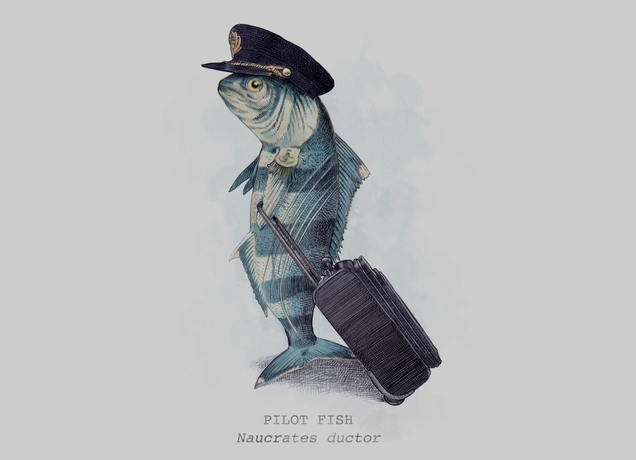 |
| Pilot Fish (Threadless) |
I have so much to do in the next week it's crazy. Regarding pilot stuff, the next stage is to get into flying again and practice IFR flights.
Commence Test Anxiety
Tomorrow I'm taking a written EXAM for my Instrument Flight Rule rating. Passing doesn't mean I'm done, it just means I can focus on other stuff in life like- everything.
